Everyone knows we have a problem at work. Does anyone think we can solve it?

There is a crisis in the workplace: employees are not happy.

According to a recent article titled “Employee Happiness Hits 4-Year Low,” published by the Society for Human Resource Management (SHRM),

[…] the overall average employee satisfaction score […] dropped to the lowest overall average score since 2019. The report is based on data collected from more than 1,600 companies nationwide, representing more than 57,000 employees.

The finding is significant for employers, who have been trying to manage employee mental health and overall unhappiness. It’s also somewhat surprising that employee satisfaction is lower now than it was at the height of the pandemic, said Anita Grantham, head of HR at BambooHR.

“The report’s time frame includes the peak of the pandemic, when employees were seeing some of the largest upheavals of their careers, so a four-year low is definitely significant,” she said.

Thoughtful people will ask why this is happening, although many of us have felt the shift, even within ourselves. SHRM has answers:

The satisfaction drop is driven by factors including inflation and financial woes, inconsistent return-to-office policies, evolving employee expectations, and layoffs, Grantham said. {…} Meanwhile, a growing focus on artificial intelligence is also sparking competition and uncertainty, employees told BambooHR.

This makes good sense: it’s hard to be happy at work if we always feel like we’re on the razor’s edge, and that any disagreement, quarterly earnings call, or new technology innovation may cost us our jobs. The fact that many of us have been let go by email only adds to the lack of humanity and connection we feel at work.

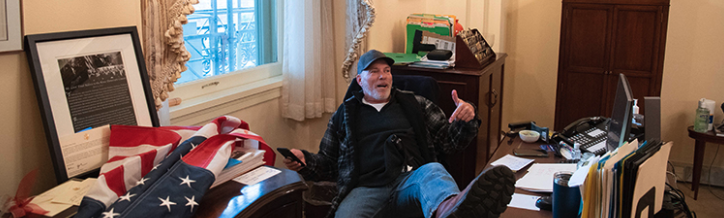
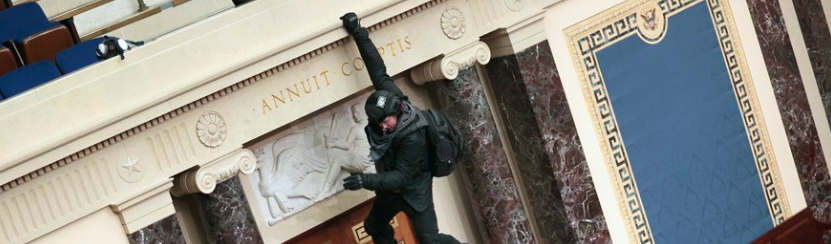
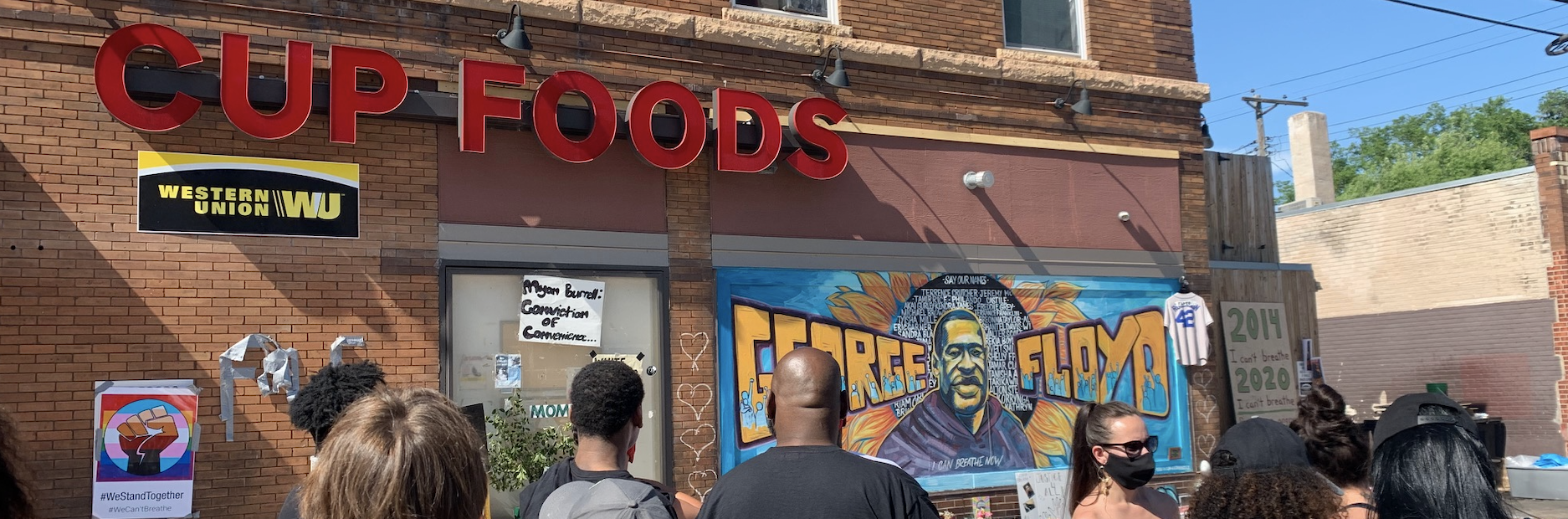
So yes, the current state of the market is contributing to our collective unease, but it’s no accident that the timing of our decline in happiness coincides with the start of the pandemic. The “inconsistent return-to-office policies” mentioned in the SHRM article barely scratch the tip of the iceberg. Just over four years ago, our offices were shuttered, George Floyd was murdered, the US Capital was under siege, and family members and friends were dying from a mystery virus. We watched it all on TV, alone.

We loved it!

I wasn’t really alone, as it turns out, and maybe you weren’t either. My wife and kids were with me, and we did our best to stay connected to friends and family with Zoom meetings and backyard get-togethers, even throughout the cold Minnesota winter.

Way back in the summer of 2020, when I asked friends what they thought of remote work, most of them told me that, although it was a bit of an adjustment, they loved it: no more sitting in traffic, no more long commutes, and no more wearing pants. They were thrilled to have more time with family, and in some ways grateful for the free time the pandemic created in their schedules. I was too. No more racing to softball games or family obligations! No more networking events or late nights in the office! While we might have missed out on a little bit of community, the trade off was well worth it.

When I asked these same friends if working from home was good for their work, the answers were remarkably consistent: not really. When work was clearly defined and teams were aligned, they could be as productive – or even more productive – than ever before (although this recent study says it’s a tie). But when it came to strategy, innovation, building a sense of team, or setting goals, especially across large teams and organizations, things got a lot harder. Relationships took longer to build. We were easily distracted (by laundry, the news, our families, Slack…). Company culture became harder to grasp. We were becoming disconnected from our jobs.

Still, all-in-all, the trade off was worth it. Work might not have been as fulfilling as it used to be, but at least it wasn’t preventing us from living our best lives. Remote work meant we didn’t have to use vacation days to travel around the world, that we could visit our parents in Florida more often, and that we could avoid Minnesota winters if we wanted to.

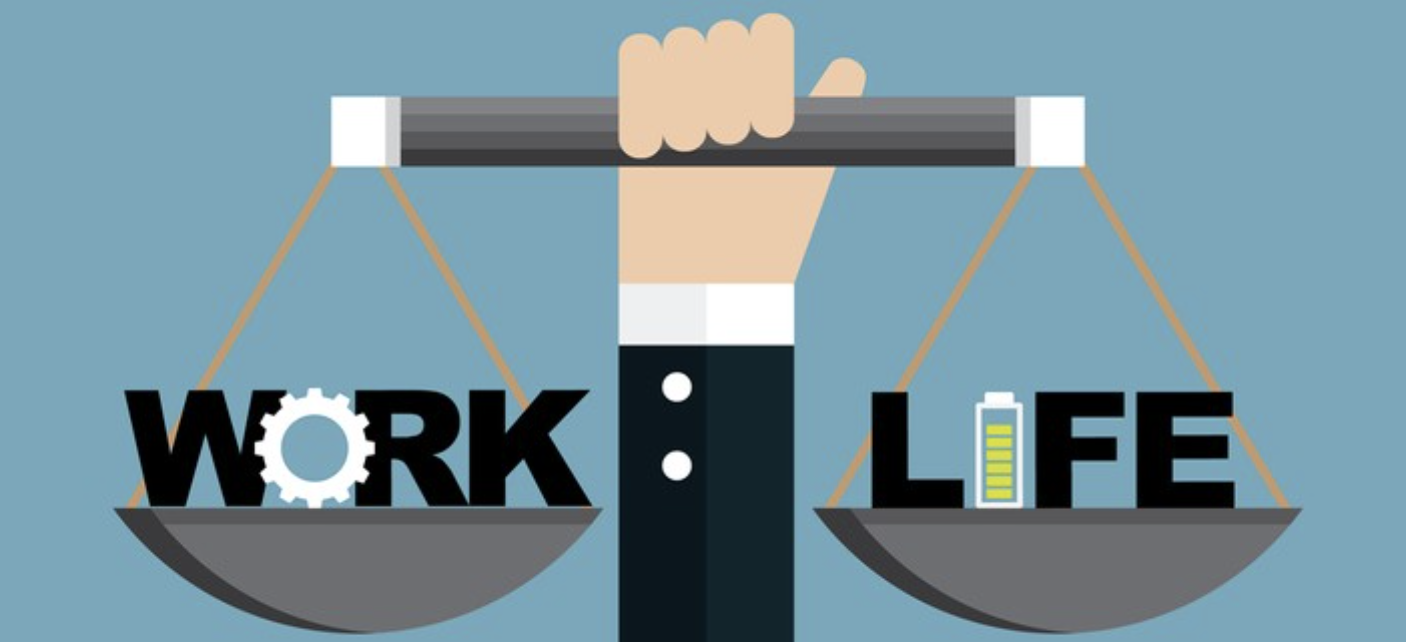
Remote work meant that we no longer needed to fit our lives in around our work schedules – now work would need to fit around our lives instead. With this new flexibility, we could live our lives to the fullest, focusing on the things that truly mattered, the things that gave our lives meaning. Work was just work, right? It was finally in its right place in our lives.

It felt healthy, like we were making real progress, when we told each other that we no longer lived to work, that we now we worked to live. We were face-to-face with the reality that our time on this earth is limited (leave it to a worldwide pandemic to provide some perspective…), and it was about time we focused on the most important things.

What could possibly be the downside?
The downside

After years spent fitting life in around the edges, Zoom meetings finally, ironically allowed us to bring our full selves to work – in fact, it was unavoidable. If we insisted, in February of 2020, that our kids didn’t distract us from work, the insisting stopped cold in March. Our co-workers – and our bosses – could see what we were dealing with as clearly as they could see the Star Wars wallpaper in our home-office-slash-childrens’-bedrooms. Meetings that were once held in conference rooms, far from the chaos of home, were now held wherever we could find an internet connection. If the dog was barking, the baby was crying, or someone was at the door, well … that was life.

If all of this is giving you just a touch of PTSD, I’m sorry. But here’s the point: in the summer of 2020, while we were focusing more on our families and less on our jobs, those two things were becoming more deeply intertwined than ever before.

In the summer of 2020, while many of us struggled to find purpose in our lives, we were also struggling to find meaning in our work. Were we really put on this big, beautiful planet to build and sell B2B software to small businesses? Or to optimize checkout for Black Friday sales? Or to provide credit to those in need?

These are important, worthwhile questions to ask. Still, in some ways, the specifics of any particular job are beside the point. In the 2021 Harvard Business Review (HBR) article “How to Find Meaning When Your Job Feels Meaningless,” Rebecca Knight wrote that:

Having a professional purpose and an identity “gives your life meaning and motivation,” says Hatice Necla Keleş, a professor in the Department of Organizational Management, at Bahçeşehir University in Istanbul. “Nothing gives you more energy than a clear purpose.” Without one, “even just getting out of bed every morning becomes a challenge.”

It turns out that a lot of us were finding meaning in those jobs we were busy rejecting. Maybe our companies weren’t curing cancer or addressing climate change, but that doesn’t mean they didn’t provide a purpose.

From a distance, many of the things we do to help our companies thrive (like the activities listed above) seem unimportant, but when we’re up close, they don’t feel unimportant at all. The software we build and sell to small businesses can help them succeed, creating jobs and communities. Black Friday sales can help people have more joyful – and affordable – holidays. Providing credit to those in need can help people buy new homes, creating the possibility of generational wealth for their families.

We can choose to see our jobs as meaningless, or as meaningful. Neither is inherently right or wrong.

A slow decay

Company goals are only one way that we find meaning in our work. As a leader of teams, I’ve always understood that one of my most important responsibilities is to my coworkers, and particularly to the teams I’ve led. There is meaning in making sure an employee gets a fair review and pay raise. There is meaning in helping unlock skills or learnings that can lead to promotions. There is meaning in aligning teams around company goals in a way that feels clear and genuine, allowing them to do their best, most focused work. The truth is that – for many of us – our work and our families are more connected than we might hope.

As leadership consultant Scott Blanchard writes:

As a manager, if your people don’t feel valued, trusted, and respected—if they aren’t empowered or challenged, or if they don’t feel they’re developing a good relationship with you—those feelings go beyond their work life into their personal life. And you become the person they’re talking about at the dinner table.

And while I’ve been focused on finding meaning in helping others, the reality is that there’s also meaning in being helped. It feels good to have people at work who are genuinely caring and supportive. It feels good to learn and to be challenged. It feels good to be part of a community of people focused on the same goal.

The simple truth is that this is harder to do online. As Jeremy Noonan, Managing Parter at Torq IT, puts it, “it’s a slow decay that you don’t realize until you get out of the house.”

Seeing through platitudes

None of the information or ideas above are controversial – there’s broad agreement that, while there are lots of individual employees who are amazingly productive without ever being side-by-side with their coworkers, having some amount of in-person time (hybrid, regular get-togethers, etc.) leads to healthier teams, better problem solving, more collaboration, and deeper commitments to our work communities. So what are we doing about it?

Lots of things, as it turns out. Some companies are surveying their people, trying to figure out what a healthy balance might look like. Others are requiring people to spend a pre-determined amount of time in the office each week, or each month. Still others are doubling down on remote work, bringing the team together once or twice a year. In the best cases, companies have clear, sensible goals, and their policies are rooted in what they’re trying to accomplish. This makes it easier to communicate clearly, directly, and compellingly. But in many situations, this doesn’t seem to be the case at all: company decisions seems arbitrary, and company communications are unconvincing.

Employees – even those of us who agree that there are advantages to being with our coworkers more regularly – can see through the platitudes. We know when a company wants us back in the office in order to “justify our massive amount of real estate” or because leaders like to see “butts in seats.” And so, we’re responding, often, with annoyance. We can be just as productive at home, we say. Even if work isn’t quite as rewarding as it used to be, we tell ourselves, the trade-off is worth it. Take this recent example from Dell:

Even months after tech company Dell pushed its strict return-to-office policy barring fully remote employees from promotions, [50 percent of] its workers still refuse to come back to in-person work. Unless these employees return to the office or Dell changes its remote work policy, they will not move up the ladder.

Remote workers were willing to defy company policy because the perks of staying at home simply outweighed what they believed working in person had to offer.

And so, it seems that we’re at a bit of a standoff. Instead of trying to find the perfect solution, companies are getting used to the idea that the perfect solution doesn’t exist, that their employees, by and large, are less interested in maximizing their effectiveness at work than they are in maximizing the flexibility in their lives. Maybe this is how things should be, and we’re at the start of a healthier, more balanced way to work and live. Maybe this is something companies just need to accept. And yet, if the data tells us we’re increasingly disconnected and unhappy, why are we committed to staying that way? Shouldn’t we all – businesses and employees – be highly motivated to solve the problem?

So many questions!

I’ve been talking with people, reading articles, and reflecting on my own experiences related to the future of work, and there are only a few things I’m sure of:

Lots of smart people are working on this. We may not have solved the problem yet, but it doesn’t mean nobody’s trying. Highly motivated people at lots of companies are working hard to define the future of work in a way that works for everyone.

This is not just a problem, it’s also an enormous opportunity. The proverbial cat is out of the proverbial bag, and we can reimagine what work can and should be. We can’t simply return to the way things used to be, and it would be a mistake to try.

Whatever the future of work is, it’s not one-size-fits-all. Different companies, employees, job functions, communities, levels of experience, abilities, work styles, etc. may respond differently to different approaches. What works for some may not work for others.

The effort it will take to figure this out is well worth it. We need to continue to hypothesize, test, learn, and iterate – and it will take time. But the future of work is a big deal, way too important to give up on because it’s hard.

This is what I think, but I’d love to know what you think. Does the information above ring true? Do you agree with my assessment of the situation? Are you happier at work now than you were pre-pandemic? How have you found balance in your work and in your life these past four years? Would you trade flexibility in your life for more meaningful work? What is your company doing to help create genuine connections across time zones? Is it working? Are you happy the way things are? Do you think it matters? Do you agree that we need to figure this out? Are you up to the challenge?

I’d love to hear from you!
If you don’t know why you’re doing something, stop and ask!


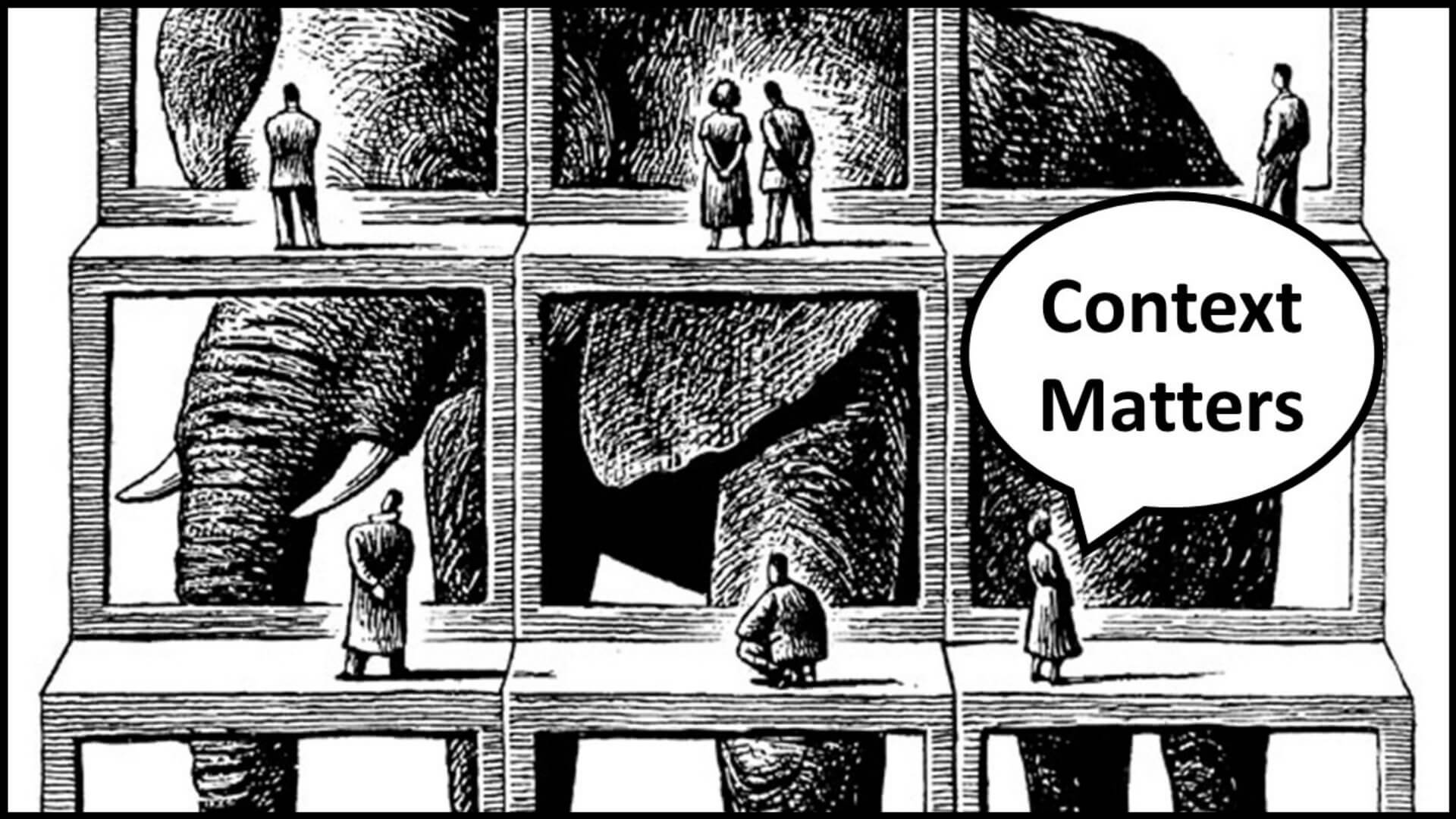
Picture this: after a long day at work, you arrive home (or close your laptop, as the case may be) and your partner is frantically packing their suitcase. “I’m leaving,” they say, before exiting the house, getting into the car, and driving away.

Alone in the kitchen, you realize how little you know about what just happened. Is your partner dealing with a work emergency? A family crisis? Do they need to get to a store before it closes? Did they just … leave you forever?

Regardless of the answer, your partner is gone. But without context, it’s impossible to know how to respond. Should you call your family? Start cooking dinner? Pack your own bag? Create a Match.com profile? How can you solve the problem if you don’t know what it is?

This happens at work all the time

Fortunately, this doesn’t happen too often in our daily lives – if it did, we might find more communicative partners. But somehow this scenario plays out at work all the time, every single day. Here’s an example to help illustrate my point – apologies if it hits too close to home:

Jane is a product manager, whose boss tells her to “remove the banner from the landing page immediately.” Jane understands that this “request” is urgent, and she chooses not to irritate her manager or slow things down by asking lots of questions. The request is clear, so Jane writes it up and injects it into the sprint. The banner is removed within the hour. Everyone is happy – for now.

Three days later, the team has enough data to assess impact of the change: as a result of the banner being removed, landing page conversion has improved by 50 bps, but nobody (literally nobody) takes advantage of the special offer, which was intended to incentivize multiple purchases. We no longer have a signup problem – now we have retention problem. Why?

As it turns out, Jane’s boss wanted the banner removed because it was covering up the email field, creating enough friction to negatively impact conversion. Removing the banner altogether was an extreme response to a simple problem, like using a sword to cut a fingernail. A more nuanced approach (like repositioning the banner instead of removing it) could have achieved both of the company’s goals. The problem was that nobody knew what the company’s goals were: no one offered them, and no one asked.

Every company I’ve ever worked at employs smart, highly motivated people. As I pointed out in my post about aligning product and engineering teams, smart and motivated people are used to delivering what’s being asked of them day after day, and they’re very good at it. Still, they crave context for their work, and they’re ready to use it to solve real business problems in smart ways. That’s good news, and there’s more: effective leaders actually want their teams to think this way. Why treat a chronic illness if you can cure the disease?

Curing the disease

Curing the disease isn’t as easy, but you can make progress today. Here’s how:

Create a culture of empowerment
If you treat your people like order takers, that’s how they’ll behave – until they find new jobs. Creating a culture of empowerment requires that we spend time thinking about problems and opportunities before proposing solutions, and recognizing that many problems have more than one perfectly acceptable solution. It means taking the time to discuss goals and provide context instead of telling people what to do, leaving space for questions, comments, and alternate approaches. There are lots of things a team can do by taking a bottoms up approach, but creating a culture of empowerment starts at the top.

Spend more time truly understanding the problem
In the wise words of Abraham Lincoln, “Give me six hours to chop down a tree and I will spend the first four sharpening the axe.” I haven’t done the math, but my years of experience tell me that every hour spent providing context to engineering teams saves between 2 and a million hours of development time. Don’t fall for the mistake of thinking hands on keys is where the magic happens. Give your teams plenty of time to understand what they’re doing and why, and they will amaze you. As you may have heard, slow is smooth, and smooth is fast.

Go out of your way to make people feel comfortable expressing their ideas
A point of view might be worth 80 IQ points, but you’ll never hear one unless you make it clear that’s what you want. In most work situations, the sad truth is that it’s safer not to argue with the boss. If you want your people to challenge you with new ideas, questions, and solutions, you have to let them know explicitly. And if your company is entirely remote, you need to remind them regularly, because it will take longer to sink in.

If you don’t know why you’re doing something, stop and ask!
The suggestions above are aimed at team and company leaders who want to create a culture of context. But once it’s clear that asking questions is okay, the responsibility belongs to everyone. I’ve seen lots of people and teams deliver the wrong work because they didn’t want to “bother” someone else, even with something as innocuous as a Slack message. If we’ve ever worked together, you’ve heard me plead: do not suffer in silence. And yet, it happens all the time. If you don’t have what you need to deliver great work, it’s your responsibility to get it. In most cases, the people responsible for providing context will think they already have, or don’t know what you need. Assume good intentions and set yourself up for success.

What do you think?

I once worked at a company that refused to provide context as a matter of policy: they felt it was more efficient for leaders to turn decisions into requirements, and to cascade those requirements to individual contributors. The way they saw it, context led to discussion, and discussion led to debate, and debate slowed things down. Simply put: they wanted less talking and more coding. You won’t be surprised to learn that this resulted in frustrated teams and failed projects.

Still, I’d love to know what you think. Have you worked at a successful company that operated differently? If so, how did you make it work? If you agree that context is important, how have you made it part of your team or company culture? Have you tried any of the suggestions above? Do you have any of your own? Please let me know!

“Healthy tension” between Product and Engineering? No thanks, I’d prefer alignment.


I remember the situation like it was yesterday. I was leading the Product and eCommerce team for a large retailer, and Black Friday was only four weeks away. At our October check-in with the executive team, I’d told the CEO we’d be delivering several features to improve checkout conversion, which would increase revenue by as much as a million dollars.

I wasn’t just trying to make myself look good. Like any competent leader, I’d made the commitment only after discussing the situation with the appropriate teams, and my partners in Engineering were in lock step. Within a week of my meeting with the CEO, though, things had changed. During a load test, a scalability issue had been discovered, and it would require the full focus of our Engineering team.

The Engineering leader asked what I wanted to do. Should we continue to focus on the features we’d promised, or pull the team off of feature development to focus on system stability? I don’t remember it being a hard decision. “Those features aren’t going to do a lot of good if the system is down,” I said, “let’s shore it up.”

Healthy Tension?

A lot has been written about the importance of “healthy tension” between Product and Engineering teams, and on the surface, it makes good sense: if one team is focused on building new features and the other is focused on code quality and stability, the tension between them might encourage discussion and debate, and neither team will lead the company off a cliff. In fact, the theory goes, this “healthy tension” might lead to compromise, somehow delivering the best of both worlds. I disagree.

The problem, I think, is in the assumption that Product and Engineering teams inherently have different goals. They don’t – or at least they shouldn’t. Both teams are responsible for the growth and stability of the company, for revenue and scalability. Neither can succeed without the other.

When we assume otherwise, we sell each side short. Any good Product Manager will tell you there are times when addressing technical debt is the smartest use of development resources, that the push for new features needs to be balanced with a view towards system health. And any good software engineer will tell you that the world’s most performant system is useless unless it drives business results, that sometimes it’s worth taking on tech debt to take advantage of a market opportunity.

Think of it this way: if you were building a house, you wouldn’t expect your architect and your builder to simply hand off their work, you’d want them to collaborate around shared goals to make sure they were in agreement. A good architect would never design a house that couldn’t be built, and a good builder wouldn’t build a house that was poorly designed. We should expect the same from Product and Engineering teams.

A smart and logical group

“At a basic level,” according to this AHA.io blog post (and many others), “product managers should tackle the ‘why’ (product strategy) and ‘what’ (features) for the product. Engineers should determine the ‘how’ — the technical implementation of features.” While this may be true at a basic level, it’s not the way great Product Development teams work.  In my experience, great teams – the ones that are most engaged and produce the best work – are the ones where Engineers are involved in defining the “what” and Product Managers weigh in on the “how.”

This is because Product Managers and Software Engineers are often among the smartest, most logical employees a company has, and they tend to be very capable of both understanding business goals and coming up with creative ways to achieve them. When we neglect to give our teams the full context of what we’re trying to achieve, we make it harder to solve the problem, and also to commit to the solution.

This takes time up front, of course, but when a Product Development team has conviction that they’re solving the right problem in the right way, they can move fast with trust and confidence. And when something goes wrong, as it inevitably will, the team members have the context they need to address the issue in a way that still meets the goal of the project.

Product Development teams

I’m not saying there’s no place for “healthy tension” at a company. As this Product Plan article points out, “there’s a reason you don’t see titles like Vice President of Innovation and Compliance. A little tension is good.” For a company to be successful, it needs to have people with different perspectives, and there needs to be lively debate.

But tension between departments is different. I prefer to think of Product and Engineering teams as combined Product Development teams, making sure they’re in lock step as it relates to goals, strategies, and priorities. As this Martin Fowler article points out, “aligning these two disparate organizations [Product and Engineering] into cohesive team units removes organizational friction and improves time to value.”

I’d encourage all of us to adopt more of a Product Development mindset, acknowledging that Product and Engineering teams cannot thrive unless they’re joined at the hip.

A note on org structure

In my current role (as in my last few), I’m responsible for Product Development, which includes Product, Engineering, and Product Design. Despite my own experience, I don’t have a strong bias for all of these functions reporting to a single leader – I’ve worked with great CTOs and VPs of Engineering, and without the right leader, combining teams can be a mistake. My point in writing this post is not about having the right org structure, it’s about having the right mindset, which can exist in any structure.

6 Reasons to Listen to the Things We Don’t Want to Hear

It was years ago, but I remember it well. I’d been at my company for less than six months, and had spent a good deal of that time trying to figure out how the Product and Engineering team could deliver an enormous system that had been promised to a large client 18 months ago anywhere near on time. The team and I had spent hundreds of hours meeting with the customers, understanding their requirements, discussing system architecture, estimating our work, and building the foundation, but we were at a loss. If each of our engineers worked hundred-hour-weeks for the next five months, we’d still be late.

My boss, who had closed the deal, is one of the smartest, hardest working people I’ve ever known, but he could be scary. Much of his career has been spent willing impossible things to happen and then working tirelessly to make them possible. I dreaded telling him that the project would be late, and since I was relatively new in my role, I sought advice from other members of the Executive team. “I wouldn’t do that,” our VP of Engineering said, “it’s going to make him angry, and it’s going to make you look bad.” “Avoid that discussion at all costs,” our CFO told me, “find a way to deliver.” But I’d done the math, and there was no way. I had to let him know.

At our next touchbase, I approached the conversation with my boss cautiously. “We’re going to be late,” I said, “by at least six months.” It was not a situation where we could force people to work more. There were more hours of work to do than there were hours remaining on the calendar. I’d push the team as hard as I could to deliver quickly, but we needed to start resetting expectations with the client. I knew it was terrible, but we had no choice.

I don’t remember all the things my boss said, but I remember the overall message: we were in this situation because the team didn’t fully appreciate the commitment they’d made, because they weren’t wiling to put in the work, and because I wasn’t pushing them hard enough.

“Everyone warned me not to tell you this,” I said, “but whether or not you want to hear it – or are able to hear it – doesn’t change the situation we’re in. The only thing it changes is what we do about it. If we’re going to work together,” I continued, “I need to be able to tell you these things. I need your help.”

It would be a gross oversimplification to say that everything changed in that moment, or that my boss suddenly accepted what I was telling him without asking lots of hard questions, pushing back, and fighting like hell to stay on schedule. He did all those things, and he was right to do them. But from that day on, we were a team, in it together. And what more could I want from one of the smartest, hardest working people I know?

Clear communication and active listening are good too

Communicating clearly and listening actively are critically important skills, both at work and in the rest of our lives. This post isn’t about either of those things. This post is about why leaders need to listen to their people specifically when they don’t want to hear what they’re saying. When the news is bad.

I could write endlessly about how our inability to face facts that don’t align with our preconceived notions is hurting our relationships and our country, or about how social media creates an echo chamber that threatens to destroy democracy and the world. Fortunately, lots of books and articles on these subjects already exist, saving me an enormous amount of time and energy. 😉 Instead, here are a few thoughts on why listening to the things we don’t want to hear makes us better, more effective leaders.

Reason 1: It Helps Us Build Better Teams

Several years ago, I wrote about Google’s Project Aristotle and the importance of psychological safety at work. People who are free to communicate openly, without fear of criticism or attack, are more likely to tell you what’s really happening. They’re also more likely to take chances.

Blameless postmortems, which Google describes as those that “focus on identifying the contributing causes of the incident without indicting any individual or team for bad or inappropriate behavior,” get at the same thing: when people can openly discuss issues without fear of being berated or losing their jobs, they can be less afraid, more truthful, and more creative.

Reason 2: It Builds Trust

Relatedly, have you ever tried to trust someone who only wanted some the facts? How confident can you be that, when things get tough, your boss – who only has half the story – will have your back? Trust requires openness, and openness requires listening to the things we don’t want to hear and responding in open, helpful ways.

Reason 3: It Makes Us Smarter

The conversation I had with my boss provided the perfect entry point for lots of gnarly, detailed conversations about the business and how my team worked. Through those, I learned more about my company’s sales process and the seasonality of our business, which helped me get better at planning our work. And my boss learned more about the system limitations and people issues I was dealing with. This information made each of us smarter, and – as a result – better at our jobs.

Reason 4: It Makes Us Proactive, Not Reactive

There are very few good surprises at work – even bonuses generally come on a schedule. Typical work surprises involve things like projects being late, expenses being too high, and people leaving. I can’t think of a situation in which I wish I had less to time to understand an issue, formulate a plan, and react appropriately. Can you?

Lots of surprises happen because employees are afraid to share bad news. Which leads me to my next point…

Reason 5: It’s Probably Something We’ll Have to Have to Deal With Eventually

Some problems go away with time. Most don’t. On the morning of March 11, 2020, I told our division leader that I’d been reading up on Covid-19 and I thought we were going to have to go to remote work sooner than we’d expected. He angrily dismissed my concerns and sent me away. Four hours later, corporate headquarters shut us down. The lesson is clear: if you don’t deal with it now, someone else might deal with it for you later.

Reason 6: It Makes Us Part of the Solution

You know who the team turns to when things go south? People who genuinely want to help. When my teams tell me something’s gone wrong, my first question isn’t “how did this happen?” but “how can I help?” (We’ll have time for the blameless postmortem later.)

What Do You Think?

Those are a few of my thoughts. Now I’d like to hear some of yours. Does my experience match yours? Do you disagree? Have you ever had a boss who was great at receiving bad news? What did they do that made them great?

And what about you? How do you respond when somebody tells you something you don’t want to hear? I’d love to know.

Who Do We Think We Are?

Has there ever been a year we wanted to end faster than 2020, or one we were more ready for than 2021? Not in my lifetime. After a devastating, intensely polarizing 2020, a new start was something everyone seemed to agree on, regardless of political affiliation.

Well, Happy New Year. Here we are. Did you really think we could do all that drinking and avoid the hangover?

Yesterday’s assault on the U.S. Capitol was both completely shocking and absolutely predictable. And it was terrifying, and infuriating, and depressing, and scary. For years now, we’ve allowed ourselves to be swept up in maddeningly polarizing political rhetoric, to surround ourselves with people, news sources, and TV stations that tell us what we want to hear, regardless of whether or not it’s true. What did we think was going to happen? And what does the fact that we let it happen tell us about who we are? Many world leaders, including U.S. President-elect Joe Biden and lots of our congress people, have commented that “the scenes of chaos at the Capitol do not represent who we are.”

I’m not sure I agree with them. I’d argue that after these last several years, the scenes of chaos at the Capitol reflect exactly who were are. I’m just not sure it reflects who most of us want to be.

Who are we?

In his speech yesterday, President-elect Joe Biden said:

America is about honor. Decency, respect, tolerance — that’s who we are, that’s who we’ve always been.

[…] For nearly two and a half centuries, we the people, in search of a more perfect union, have kept our eyes on that common good. America is so much better than what we’ve seen today.

(https://www.wbur.org/news/2021/01/06/transcript-joe-biden-capitol-chaos)

This is a hopeful view of what America stands for, but it’s not an accurate assessment of who we are. If we really want to be a nation that values decency, respect, and tolerance, we have a lot of work to do, and we have to be honest with ourselves. We can start by educating ourselves with great books like Isabel Wilkerson’s Caste: The Origins of Our Discontents, or by acknowledging the differences between the way police treated yesterday’s armed white insurgents, opening doors and taking selfies, and the way they treated peaceful Black Lives Matter protestors just a few short months ago, with tear gas and rubber bullets.

Are we capable of being decent, respectful, and tolerant to people who don’t look, think, or act like we do, or do we only embody these qualities when we’re surrounded by people who are just like us? Can we tolerate facts even when we don’t like them? And if we don’t respect each other or the rules, will we be held accountable for our actions? Right now the answer to all of these questions appears to be “no.”

How do we go on?

While our elected representatives in Washington D.C. debate how to repair our broken nation and hold those responsible accountable, the rest of us have to figure out how to do our part – and go on with our lives – from our home offices. Lots of us have to go back to work, developing code, completing projects, providing support, and leading teams. We can’t spend the week watching CNN or Fox News. We can’t quit our jobs and dedicate our lives to a better government or police force. We can’t crawl into a hole and wait this out. Depending on our jobs, maybe we can’t even say what we really think. How do we go on?

The first thing we can do is acknowledge that we’re all in this together, regardless of our politics. Some things, like trying to overthrow our democracy, encouraging racist behavior, or promoting conspiracy theories that are demonstrably false, are issues of human decency and ethics, not politics. We don’t have to agree on everything (I’m strangely excited for the time when we can go back to arguing about taxes and legalizing marijuana), but we can agree on a few things, including what we will and won’t tolerate from ourselves and each other. We can also acknowledge that there are times in life when standing on the sidelines is not a viable option, and that some topics once considered taboo – like systemic racism, misogyny, sedition, and lies – need to be confronted consistently and openly regardless of politics. We need to have the courage to be who we are, even at work.

And if work isn’t the best place to share our thoughts on what’s happening in the world, there are other places that are. I’m not advocating preaching to the echo chamber on social media. I’m suggesting that each of us take a look at how our elected representatives behaved yesterday and what they’re saying today. These people work for us. They need to know what we think, and that we will remember and hold them accountable for their actions, both good and bad. My wife and I still remember which of our senators voted for and against issues that were important to us 10 years ago – remembering how each our representatives responded to an attempted government coup is worth the effort. Making a few calls to your local representatives now, while you’re fired up, couldn’t hurt either.

The next thing we can do is admit that these last 12 months have been hard in ways in which many of us have been completely unprepared, and to show more empathy for each other than we ever thought possible. For employees, that means understanding that emotions, fears, despair, and anger come in waves over time and that they will get in the way of everything else you’re trying to do. It means knowing your family may need you now more than ever. It means making sure your work gets done and your coworkers aren’t left holding the bag … but it also means giving yourself and others the space to be human, regardless of work pressures and deadlines.

For leaders, it means acknowledging that all of the things I just described are true not just for your teams, but also for you. It means taking the time to process your thoughts and feelings so you can be there for your teams. It means knowing when you need to get some perspective, take a walk around the block, and come back ready to kick ass. The emotional roller coaster we’re all on, and the logistical challenges we face given the pandemic, can’t be controlled or wished away, but if we work hard at it, they can be understood and managed. We need to take care of ourselves.

Who do we want to be?

Questions about who we are and who we want to be are important ones to wrestle with. In some ways, the country is not all that different from a company that needs to review its mission, vision, and core values on a regular basis to make sure everyone still agrees on where we’re heading, how we’ll get there, and the rules of engagement. It’s hard work, but it needs to be done. We can be aspirational, as long as we’re honest. And no good leader would tolerate an employee who openly flouted their company’s – or their country’s – values. This applies to our congresspeople at least as much as it does to our administrative assistants. Those who actively and openly lied to our people in order to fan the flames of hatred and undermine our democracy need to be held accountable, and they need to go.

But if we’re honest about who we are and who we want to be, and if we all agree and are aligned, then our actions will speak for themselves. When that happens, in the words of President-elect Joe Biden:

And this godawful display today, let’s bring it home to every Republican and Democrat and Independent in the nation, that we must step up. This is the United States of America. There’s never, ever, ever, ever, ever been a thing we’ve tried to do that when we’ve done it together, we’ve not been able to do it.

(https://www.wbur.org/news/2021/01/06/transcript-joe-biden-capitol-chaos)

We just have to agree on what we’re doing first.

Rock Star Leadership: Advice from Queen Bey

It’s a question I’ve been asked more times than I can count: when you think about your career, who inspires you?

As a technology leader, I know the right answers to the question: Elon Musk, Steve Jobs, Annie Easley, Bill Gates, Tim Berners-Lee, and Katherine Johnson are good ones, for example, geniuses whose vision, drive, passion, and focus changed – and continue to change – the world forever. But I spent my teenage years dreaming of being a rock star, not a technologist, so while I’m blown away by Elon Musk’s work, I’m also convinced that the world would be a terribly boring (and potentially scary) place if we all had posters of him on our walls.

When I think about the people who inspire me, and who continue to push me in creative, visionary, exciting ways, I still think about the people I looked up to (sometimes literally, on my bedroom walls) as a teenager – artists like David Bowie, The Beatles, and even Lenny Kravitz. These artists challenged our perceptions of art, music, sexuality, and race. They broke boundaries while producing incredible art. And they made us dance while they did it.

Which brings me to Beyoncé Knowles-Carter. Even as a teenager in the late-1990s group Destiny’s Child, her talent, drive, and star quality set her apart from her peers. When she released her first solo album in 2003, it was clear that Beyoncé was just getting started.

As a musician, Beyoncé has sold nearly 180 million albums worldwide (including 60 million with Destiny’s Child), making her one of the most successful recording artists of all time. She has had 22 Number One hits on the U.S. Dance Club Chart, and has never had a studio album that didn’t go platinum at least one time. She’s won all of the most important awards in her field, including those from MTV, BET, The Council of Fashion Designers of America, Billboard, Kids’ Choice, Teens Choice, and the NAACP. She’s been nominated for 79 Grammy Awards and has won 24 times.

As impressive as this is, it only tells part of the story, because Beyoncé is much more than a recording artist with great dance moves. In 2007, she formed the company Parkwood Entertainment, which not only oversees her tours, videos, and recordings, but also acts as a management company for other artists, a record label, a film production company, and the owner of an athletic apparel brand called Ivy Park. As a self-made, high-integrity entrepreneur and business person, Beyoncé famously demands creative control over her projects, and the results speak for themselves. Her net worth is estimated at more than $500 million. It’s not Gates/Musk/Buffet money, but I bet her parties are a lot more fun than theirs are.

Before. I go on, I need to confess: I’m not the world’s biggest Beyoncé fan. I haven’t seen all of her specials, bought all of her albums, or watched all of her videos looking for clues about her life. I didn’t have her poster up on my wall as a kid. Still, here are a few things about leadership I’ve learned from Queen Bey:

Without diversity, we all lose

If people in powerful positions continue to hire and cast only people who look like them, sound like them, come from the same neighborhoods they grew up in, they will never have a greater understanding of experiences different from their own. They will hire the same models, curate the same art, cast the same actors over and over again, and we will all lose. The beauty of social media is it’s completely democratic. Everyone has a say. Everyone’s voice counts, and everyone has a chance to paint the world from their own perspective.

Beyoncé in Vogue Magazine

Even when she’s working with her husband Jay-Z, who operates within the bravado-filled world of rap, Beyoncé and her music are always, always inclusive. She is a fierce LGBTQ ally and is outspoken on issues related to Black people and culture, using her position of power to educate her fans (and some who are not) in ways that are respectful, confrontational, and challenging. She doesn’t shy away from the tough stuff, regardless of the stage she’s on. Her lyrics tell the same story:

My music doesn’t discriminate against anyone
So we’re gonna tear it up
Everyone moves to my stuff

Translated from “Mi Gente,” by Beyoncé

Beyoncé reminds us that without diversity of experience and thought, “we will all lose.”

Find your strength and stand up for yourself

Beyoncé is one of the most empowered and empowering performers alive. From “Single Ladies (Put a Ring On It),” which tells a former lover “If you liked it, then you should have put a ring on it,” to “Bow Down/I Been On,” which boldly claims “I’m bigger than life, my name in the lights/I’m the number one chick, ain’t need no hype,” Beyoncé celebrates the power that comes with being a successful woman and a leader.

Queen Bey also knows that you cannot make an omelette without breaking a few eggs. In the past decade, she has famously took on Target and Amazon in 2013 for refusing to stock her Beyoncé album, wore a Black Panther uniform in the 2016 Super Bowl halftime show, and created a birth announcement for her twins in 2017 intended to show that “she is mother and saint and goddess of beauty and sex, all at once, and she’s doing it as a woman of color, too.” (Vox) Beyoncé does things her own way.

Be fierce, and also compassionate

One of the things I really appreciate about Beyoncé is that even when she’s fierce, she’s not afraid to show her more sensitive side. Her confidence is not the overblown trash-talking that shows up so often in music and politics – it’s a much more nuanced thing, tempered with humility and humanity. The Lemonade album provides a masterful example of this. Throughout the album’s 12 songs, the narrator struggles to make sense of what led her spouse to be unfaithful, alternately feeling rage, loss, depression, and love. The rage part is clear and convincing. The narrator of the story has been wronged, and she, a powerful leader with truth on her side, does not mince words:

Who the f— do you think you is?
You ain’t married to no average b—-
Keep your money, I got my own
Keep a bigger smile on my face, being alone

I am the dragon breathing fire
Beautiful mane I’m the lion
Beautiful man I know you’re lying
I am not broke and I’m not crying

Don’t Hurt Yourself,” by Beyoncé

But equally compelling, and at least as honest, is the narrator in the song “Hold Up,” who can’t help questioning her own worth, even as she knows she’s in the right:

I’m not too perfect
To ever feel this worthless
How did it come to this
Scrolling through your call list

Is there something that I’m missing? Maybe my head for one
What’s worse looking jealous and crazy, jealous and crazy
Or like being walked all over lately, walked all over lately

Hold Up,” by Beyoncé

Each of us – leaders, employees, parents, friends, lovers – experience times of fragility, times that balance our moments of absolute clarity with doubt or ambivalence. Beyoncé does a masterful job of helping us understand that this is a normal part of what it means to be human. Leaders who can find this balance are on a path to greatness.

Balance process and structure with creativity

I don’t like too much structure. I like to be free. I’m not alive unless I am creating something. I’m not happy if I’m not creating, if I’m not dreaming, if I’m not creating a dream and making it into something real. I’m not happy if I’m not improving, evolving, moving forward, inspiring, teaching, and learning.

Beyoncé in Vogue Magazine

Some amount of structure is critical to our success – leaders need consistent, well-articulated processes in order to scale teams and solutions. But too much structure can get in the way of our ability to be creative, and it’s by balancing process and creativity that we unlock incredible opportunities. Apple is great at producing iPhones, but they had to invent them first. The same goes for Tesla and the Model S.

Queen Bey, like other recording artists, has a “normal” process too. Albums come out every two years or so, with Rolling Stone articles written in advance to generate hype, and a single or two dropped within weeks of the full album release. After an album is released, there are interviews, videos, and world tours. This tried and true, predictable process has served the recording industry well for many years.

But when the album Beyoncé was released on a random Thursday night in 2013, Beyoncé showed that, by leveraging the power of social media and digital music platforms, she could open up new ways of thinking for the music industry, generate enormous buzz, and – importantly – continue to sell millions of albums. Beyoncé wasn’t the first to do this, but she was the most successful, and the reverberations of her 2013 album launch are still being felt by the industry. Creativity FTW.

Be true to yourself

As the mother of two girls, it’s important to me that they see themselves too—in books, films, and on runways. It’s important to me that they see themselves as CEOs, as bosses, and that they know they can write the script for their own lives—that they can speak their minds and they have no ceiling. They don’t have to be a certain type or fit into a specific category. They don’t have to be politically correct, as long as they’re authentic, respectful, compassionate, and empathetic. 

Beyoncé in Vogue Magazine

Unlike most of us, Queen Bey’s celebrity means that everything she does is viewed under a microscope – not her songs, performances, and business deals, but also her pregnancies, political views, and vacations. And while Beyoncé experiences this reality in a completely different way than most of us, the core concept – that work and life are not “balanced” but are one and the same – holds true for most of us (my friends Marc Kermisch and Nancy Lyons have written and spoken eloquently on the subject). From Forbes Magazine:

Today the boundaries between one’s professional and personal life are constantly blurring. It is impractical to think of work-life balance as a complete separation between worlds. David Solomon, the global co-head of Goldman Sachs said, “today, technology means that we’re all available 24/7. And, because everyone demands instant gratification and instant connectivity, there are no boundaries, no breaks.” Ron Ashkenas, a consultant and author, shares his experience with a conference call while on vacation, where each member of the call was on vacation as well, but no one thought to suggest rescheduling. The idea that a person’s work life and personal life will not intermingle is unrealistic today. Jim Bird of WorkLifeBalance.com writes, “work-life balance does not mean an equal balance.” In fact, he notes that few people have found a single definition for the concept of work-life balance.

Forbes Magazine

But Beyoncé does much more than implicitly acknowledgment that work and life are completely intertwined. Her message is one of empowerment for all girls:

We’re smart enough to make these millions
Strong enough to bear the children
Then get back to business

Who run the world? Girls! Girls!
Who run the world? Girls!

Run the World (Girls),” by Beyoncé

For Beyoncé, every interaction, every piece of art and work, is an opportunity to express her truth and her values. If she wants her girls to grow up feeling that they can accomplish anything, she needs to believe it, say it, and show it.

Let that be a lesson for us all.

Leaders: You Must be Present to Win

Screen Shot 2020-09-01 at 2.59.08 PM

Years ago, the company I worked for was struggling. We hadn’t hit our numbers in months, and it was determined that layoffs would be necessary. Secret meetings were scheduled, often early in the morning or late in the day. Spreadsheets were created, reviewed, and updated. The process went on for weeks. During that time, if you happened to catch a glimpse of one of our executives, it would have been racing through the halls from meeting room to office, quickly and with focus. When they arrived safely in their offices, our leaders closed their doors, so as not to be asked questions that were impossible to answer.

If you’ve been around awhile, you’ve likely witnessed this kind of behavior. It’s completely understandable, and an absolute disaster. Employees know their leaders are privy to private information, and that there are things they can’t share. They get it. But when leaders start to hide away, purposely making themselves unavailable, it makes employees angry and nervous. And what do employees do when they’re angry and nervous about their jobs? They look for new ones. In most cases, your best employees are the ones who’ll find jobs first.

This is what happened at the company I’m describing. What started out as a small, potentially containable reduction in force turned into a mass exodus, as employees lost trust in their leaders and looked elsewhere. I learned a lesson I will never forget: leaders must be present to win.

Unprecedented times

Remember back in March when the coronavirus was spiking and our employers sent us home? My company’s first fully remote day was Friday, March 13. We thought we’d be back in two or three weeks, tops.

It’s shocking to remember how naive we were at the start of this global pandemic. Did we really think it would be taken care of in two weeks? My first note to the team included a sentence or two about the emotional aspects of the situation, and then a full page of logistics: best practices for remote meetings, core hours, ergonomic concerns, and the like. It wasn’t terrible, but it wasn’t awesome. I soon learned that the logistics of working from home were going to need to take a backseat to the more pressing concerns of my team members, like fear and loneliness.

In March, there was no way to know what leadership challenges we’d be facing in the coming months. We said the word “unprecedented” a lot, but how many of us fully understood what that meant? If a global pandemic was our only challenge, there were still no books to read to get us through, no podcasts to listen to from people who’d been through it before. And a global pandemic was not our only challenge.

Still, at that time we had our hands full with the things we knew about. As three weeks turned to four, and then five, my leadership team and I looked for new ways to keep the team upbeat, engaged, productive, and informed. Our weekly all hands meeting would continue, of course, complemented by daily leadership stand-ups and a weekly all-team happy hour, with trivia and other fun games. We slowly settled into our new normal.

Staying in touch

There’s a big difference between leading a remote team and leading a remote team during a pandemic. It was a little bit different for my technology team, but in general, my company had considered working remotely a perk, reserved for all-stars who had proven themselves capable and trust worthy. When working remotely became a requirement on March 13, it was as big an adjustment for managers as it was for individual contributors.

A technology team, of course, handles issues as they occur, at all hours of the day, from wherever we happen to be. This means the logistics of working remotely had been figured out ages ago, as a matter of course. I had zero concern in this area.

But I was concerned about how I was going to continue to connect with my team members. Each of our teams has a daily standup, but I’m not on any of the teams, and “walking the floor” had been an important part of my routine. How would I replicate that in an all-virtual environment?

The short answer is that I couldn’t, but I could find other ways to connect. I became a Slack power user, adding comments in channels where I used to lurk quietly, and reaching out to employees I didn’t naturally cross paths with on a regular basis. I blocked time on my calendar time for these Slack check-ins, almost as though they were one-on-ones.

I did – and I do – other things too. I’ve scheduled long-distance lunch dates with employees and teammates, gone for bike rides and walks, and hosted small socially-distanced happy hours in my backyard. I’ve sent emails, texted, showed up at meetings, and met people at parks. The reasons for doing these things are both personal and professional. Of course I need to find creative ways to stay close to the work my team is doing, to get beyond the surface. But I also need to stay close to the people. I miss seeing them in real life, and I need to make sure they know they’re on my mind, that I care.

Screen Shot 2020-08-31 at 10.58.59 PM

The weekly email

Nearly every Monday morning since March 16, I’ve sent an email to my entire team (I missed two when I was on vacation). It’s a commitment I made to myself on day one, and George Floyd’s murder and the events that followed reinforced the need. There were things I needed to say, and things the team needed to hear. Even if I couldn’t see every person on my team every week, I needed to be present, and I need to communicate proactively.

After more than five months, it can be hard to find ways to keep the emails fresh and new, but that’s not really the point. Some weeks I write about world events or work highlights. Other weeks I discuss things that are happening in my family or articles I find. It can be hard to find the right balance between sharing my opinions and veering into what currently passes for politics, but I try. Here are a few excerpts from my emails.

March 23:

My family, like most of yours, is trying to make the most of our time together without killing each other. My teenage son works at the local Kowalski’s, and he’s thoroughly enjoying being the only person in our family classified by the government as an “emergency worker.” 

June 8:

Over the course of the last week, George Floyd’s murder went from being a local story about an unjust police killing in Minneapolis to a national emergency focused on much larger, systemic issues. Thousands of people across the country are joining together and saying “no more.” It’s about time. Please stay safe and wear your masks out there.

July 27:

I know it can feel weird to do, given that most people aren’t actually going anywhere, but an occasional day off can be fantastic for our mental health, and I strongly encourage people to use PTO when you can. Most people are not currently doing this. Maybe you’re saving it for a rainy day, or hoping things will open up more this year? Fair enough. I’m not telling you what to you – my only motive is to make sure those of you who need a break find a way to get one. Burnout is real, and it’s something I’d like to avoid, if possible. 

You get the idea. The email isn’t magical, but it reminds my team that I’m here, that I’m human, and that I’m deeply invested in our success. It also keeps me present and gives me another opportunity to lead, and I’ve gotten consistent feedback that the team likes it. (By the way, if something important happens today, I’m not going to wait until next Monday’s email to reach out to the team.)

Employee expectations

As I mentioned earlier, we’re in uncharted territory, both as employees and as leaders. You can argue that great leadership strategies work regardless of the situation, but let’s face it: Jack Welch never led a team through a pandemic.

There are a lot of things we don’t know – how long the coronavirus will last, its lasting impact on our businesses, when we’ll be back in our offices, the outcome of the next election, whether we’ll make real improvements related to equity, and so much more. It’s incredibly hard to lead a team through so much uncertainty. In order to do it, we need to free ourselves from the idea that our teams expect us to be all-knowing. They don’t.

But our teams do expect certain things from us, especially now. They expect us to be honest, for example, and to be as transparent as possible, even though they know we sometimes have information that can’t be shared. They expect us to listen to their concerns, and to escalate them within our organizations as it makes sense. They expect us to understand that it’s impossible to be completely present in a meeting when they’re bouncing their toddlers on their laps. They expect us to be human, and – even if they don’t always show it – they know we’re feeling a lot of the same stress and uncertainty they are. Most of all, our teams expect us to be present, to show our faces, and to walk the talk.

In this post, I’ve shared a few of my own ideas and strategies for being present with my team. I hope some of them are useful to you, but I’m very aware that I don’t have it all figured out – we’re all learning as we go. Now I’d love to hear your ideas and strategies. How are you finding ways to connect with your teams? What’s working, and what’s not? How are you balancing your own stress with your work? How are you showing the team they’re in good hands? How are you leveraging technology? How are you being present for your team every single day? I’d love to know.

Can agile principles help us become anti-racist?

fists

Like many people, I’ve been a sponge lately, taking in amazing books like Ta-Nehisi Coates’s Between the World and Me, listening to fantastic podcasts like How Core Values Influence Diversity and Inclusion with Kim Crayton, and reading mind-blowing articles like What is Owed by Nikole Hannah-Jones. Now is a time for me to learn, and I’ve got years of work to do before I can claim to have gotten past the tip of the iceberg.

But I don’t have years, weeks, or even days to read, listen to, and process all of this information before taking action. I have a job to do, and a team demanding that I use my position to make positive change now. Yes, this is a time to learn, but it’s also a time to act. We’ve been patient – even with ourselves – for too long.

This is complicated by the fact that it’s a terrible time to make mistakes. The stakes are high and scrutiny has never been greater. On the positive side, we’re all being held accountable for our words and actions, as we should be. On the negative side, we’re also demanding that people take risks, and mistakes can be costly.

So it seems like we need to listen, learn, and take action, and we need to do it without making mistakes. But how?

Unfortunately, we’re going to make mistakes

Unless our plan is to learn everything before we do anything, we will fail, at least occasionally. The issues we face related to racial injustice have been deeply ingrained in our society for hundreds of years, and in order for us to make things better, we’re going to have to have hard conversations and take risks. And what are the odds we’ll get it right every single time? Not very good.

If our goal is to make things better, and to do it quickly, we need a structure that allows us to make mistakes and learn from them iteratively. And here’s where I turn to the agile principle of failing fast. In agile development, when we talk about failing fast, we assume that failure is inevitable, at least some of the time. And if failure is inevitable, then the faster we do it, the faster we learn and improve. According to Ben Rossi in Information Age:

In software development, the point about “fail fast” is that if a failure is going to take place you want to reduce the time lag in a) detecting the failure, and b) relaying the detection back to the responsible developer. 

What would it mean to apply this concept to our interactions with others, to our discussions about racial injustice? If we all agreed that “detecting the failure” was step one, then we’d expect it, and we’d be grateful when it happened quickly so we could move on to step two, “relaying the detection back.” For example, if our organization unintentionally supported the wrong charity, or made well intentioned hires without supporting them well, or changed HR policies that singled people out instead of bringing them together, we could identify these errors and fix them. If we could do this without fear or judgement, imagine how quickly we’d learn and improve.

Of course, this would require that we all acknowledged up front that we’re going to make mistakes, and that this is as important as it is inevitable. We’d have to trust each other, assume positive intent, and agree not to blame or judge each other when we fail. We’d need to speak freely, without fear of unintended consequences, and we’d need to listen openly, giving others the benefit of the doubt. This sounds hard, but I think it’s possible.

Embracing the agile concept of failing fast

At the start of this post, I said what we needed to do was clear: listen, learn, and take action without making mistakes. But what if we acknowledged that mistakes will be made and leveraged a process – like agile – that helped us fail fast, correct our behavior, and learn? What if we were willing to be wrong without being defensive?

As we work towards social justice and equality, we need to acknowledge that we will, inevitably, make mistakes. And while agile philosophy may not be the silver bullet that makes us anti-racist, I do think it might offer us a viable way forward. If we embrace the concept of failing fast and use it as a way to learn, understand, and improve over time, we’ll be better able to meet the needs of each other and our teams over time. And that’s a start.

Donald Trump, Job Applicant

Screen Shot 2020-08-17 at 9.00.38 AM

I’m not the first person to point out that if Donald Trump had a “normal” job, he’d have been fired by now. No HR policy would allow his behavior, and no Board of Directors could withstand the scrutiny, regardless of how much money he was making the company. A recent Business Insider article titled “What if Your Boss Acted Like This?” put it this way:

Imagine your boss did this: 

You send him a memo about a life-or-death issue for the company, and he doesn’t read it. He has regular calls with firms you’re doing deals with, but he doesn’t prepare for them, and instead spends the whole call talking about himself, or insulting the person he’s talking to. He commits an egregious, humiliating screw-up one morning, then turns his phone off and plays golf, leaving everyone else to clean up the mess.

These are not hypothetical examples. This is quite literally an account — taken from a single day! — of how Donald Trump does the job we hired him to do, and that we pay him to do.

But Donald Trump doesn’t have a “normal” job, and the only way he can be “fired” is if the American people vote him out. In fact, Donald Trump has never actually even had to  apply for a job (if you think running for president counts, compare that with any job interview you’ve had). So I started to wonder: what would happen if he did?

An interesting resume 

Imagine it, if you can: Donald Trump, fresh off his tour as President of the United States, sending out resumes in the hopes that one of the companies he’s considered buying over the past 50 years might hire him instead. The jobs I hire for, typically team leaders, product managers, product designers, and software engineers, are somewhat specialized, and require a fair amount of experience, but let’s face it: Trump’s resume is pretty interesting, so I might bring him in regardless.

The Interview

The interview here is, of course, imagined. Trump’s words are his own, pulled from interviews and statements he’s given in the last five years, with links to their original sources. My questions aren’t actual interview questions, but I think they get the job done.

Lee: What makes you a the best candidate for the job?

DJT: ….Actually, throughout my life, my two greatest assets have been mental stability and being, like, really smart. I went from VERY successful businessman, to top T.V. Star…to President of the United States (on my first try). I think that would qualify as not smart, but genius….and a very stable genius at that!

Lee: That sounds impressive. And that makes you the best candidate?

DJT: So great looking and smart, a true Stable Genius!

Lee: Um, okay. Accountability is a big deal to me. Tell me about a time when you took responsibility for something that didn’t go well.

DJT: [Silence]

Lee: Maybe related to the coronavirus?

DJT: I don’t take responsibility at all. This horrible disease was sent to us by China. It should not have been sent. They should have stopped it. They could have stopped it.  They didn’t. And the entire world has gotten infected, and a lot of countries are going through a lot right now.

Lee: Once it was clear that coronavirus was here, and that we needed to deal with it, how did you see the role of the federal government versus the states?

DJT: The states’ testing is up to the states to do, which will implement the test and logistically coordinate the tests.

Lee: “The states’ testing is up to the states to do”? That’s not really saying anything at all.

DJT: Similar to the situation with ventilators, states need to assess their complete inventory of available capacity. Some states have far more capacity than they actually understand. And it is a complex subject, but some of the governors didn’t understand it. Not simply ask the federal government to provide unlimited support.

Lee: So the states should not ask the federal government for support?

DJT: The authority of the President of the United States, having to do with the subject we’re talking about, is total.

Lee: I’m not sure that’s true, but let’s assume – just for a minute – that it is. How would you rate yourself in your handling of the coronavirus? I mean, the U.S. has already had more than 5.5 million cases, with more than 170,000 deaths.

DJT: Nobody has done anything like we’ve been able to do. And everything I took over was a mess. It was a broken country in so many ways. In so many ways. We have done a job, the likes of which nobody has ever done.

When I took this over, it was an empty box. We didn’t have testing. We didn’t have anything. We had a broken system there. We had a broken system with stockpiling. We had a lot of broken systems. And I’m not just blaming President Obama. You go long before that.

Lee: I’m still trying to figure out which role on the team might be the best fit for you. Your responses don’t exactly scream “engineer.” What job on the team do you think you’d be best suited for?

DJT: I don’t know if you know this but probably 10 years ago I was honored. I was the man of the year by I think somebody, whoever. I was the man of the year in Michigan, can you believe it? Long time.

Other countries come to see me, all of their leaders they say, sir, first thing, sir, congratulations on your economy. We’re trying to do the same thing. Congratulations sir. And I say you think Hillary could do this? I don’t think so.

Lee: Are you talking about Hillary Clinton? I’m not sure what this has to do with her, and we don’t have an opening for “man of the year,” but since you’re focused on the economy, maybe a job in Finance? Although it’s been extensively reported that, under your leadership. the US economy is suffering its biggest contraction in 75 years. That doesn’t make it sound like you’d be an asset to our Finance team.

DJT:  It was just put out that the United States economy added almost 5 million jobs in the month of June, shattering all expectations. The stock market is doing extremely well, which means, to me, jobs. This is the largest monthly jobs gain in the history of our country. The unemployment rate fell by more than 2 percentage points down to just about 11 percent. We started at a number very much higher than that.  As you know, we broke the record last month, and we broke it again this month in an even bigger way.

Lee: This certainly seems like good news to me. All this talk about jobs makes me think you might be a fit for our HR department. Like other companies, we’re working hard to be anti-racist, and as a Minneapolis-based company, we were sickened by the murder of George Floyd.

DJT: All Americans were rightly sickened and revolted by the brutal death of George Floyd. My administration is fully committed that for George and his family, justice will be served.

Lee: I’m so glad to hear you say that, I was nervous you were going to say something about there being “fine people on both sides.”

DJT: Hopefully George is looking down right now and saying, “This is a great thing that’s happening for our country.” This is a great day for him. It’s a great day for everybody. This is a great day for everybody. This is a great, great day in terms of equality. It’s really what our constitution requires and it’s what our country is all about.

Lee: How on earth can this be a great day for a man who was brutally murdered by police?

DJT: What we’re announcing today is a tremendous tribute to equality. We’re bringing our jobs back. When we had our tremendous numbers. And when we had just prior to the China plague that floated in, we had numbers, the best in history for African American, for Hispanic American, and for Asian American and for everybody. Best for women, best for people without a diploma, young people without a diploma. I mean so many different categories. Our numbers were the best in almost every category.

Lee: I notice you mentioned women.

DJT: You know, I’m automatically attracted to beautiful — I just start kissing them. It’s like a magnet. Just kiss. I don’t even wait. And when you’re a star, they let you do it. You can do anything. Grab ’em by the –

Lee: [Interrupting] So definitely not a job in HR. Wow, look at the time! Thanks so much for coming in. We’ve got a few other candidates to talk with, but you should expect to hear from our HR team within a few days.

Screen Shot 2020-08-25 at 7.59.43 AM

Unqualified for any job

There you have it. My imagined interview, with answers pulled from real interviews, speeches, and Tweets. My goal was not to be comprehensive – I barely scratched the surface – but you get the idea. You can’t make this stuff up.

And yet, much of what Trump has said, even here, is made up. Recent data shows that the President tells more than 23 lies every day, a number that has increased since the start of COVID-19.

Setting aside the bluster, Trump’s record as a President is clear, consistent, and public. So is his record as a businessman. A quick internet search will give you the facts related to his handling of race relations, the coronavirus, his record on job growth, the state of the economy, what he’s done to the environment, the company he keeps, and who has benefitted from his policies. It will also reveal that Trump has golfed 135 times since taking on the presidency at a cost to taxpayers of approximately $140 million, and that he has openly used the highest office in our country to line his own pockets.

If, after all of this, you’re still feeling good about a second Trump presidency, consider this: if Donald Trump showed up at your place of business (office, fire station, convenience store, restaurant, etc.) for an interview, what job would he be qualified for? What job would he be good at? What job would you give him? If your answer, like mine, is not a single one, then is he the right person to run our country?

No justice, no sleep

Screen Shot 2020-06-04 at 11.18.13 AM

Just under two weeks ago, just over a mile from my house, George Floyd was murdered. It is indisputable that if he were white, he would still be alive today. 

We’re all exhausted. It’s hard to sleep with helicopters circling overhead, and with the constant threat of violence in our neighborhoods. It’s hard to sleep with white supremacists and anarchists descending on our city and hiding in our backyards. It’s hard to sleep when we see so much injustice all around us. 

We white folks slept better a few weeks ago, didn’t we? But how? The racism and hatred that led to George Floyd’s murder has been with us all along. Without systemic change, it was inevitable that another black person would be killed by another white police officer. How did we sleep? 

We slept by pushing these terrible, inevitable facts out of our minds. We focused on the small things we could do, and on our good intentions, and on the donations we made to the right causes. We did this even as the coronavirus continued to spread disproportionately to communities of color. We knew these things, but they were too uncomfortable to face, so we looked away. 

It’s much harder to look away now. How will be sleep? Maybe we won’t. Probably we shouldn’t.

What now, white guy?

I’m a well-meaning white man. I’ve been extremely restrained on social media, because I believe it to be an echo chamber at best. And while my priority is to listen carefully and openly, I need to make my feelings public and clear:

Racism is poison. I’m committed to working against it, even when it makes me uncomfortable. I’ll listen better and learn more, and I’ll use my influence to make things better. I’ll put more of my money, and all of my votes, where my mouth is. I stand in solidarity with the black community and demand justice for George Floyd. Black lives matter.

So what? So nothing. To build a society that works for all of us, this statement and the thousands just like it being posted across the internet by well-meaning white people are less than the price of admission. I know I need to back up these words with actions. I’ll write more about that in future posts, including how to lead people through these challenging topics and times.

The center of the world

I love so much about Minneapolis. I love its lakes and its restaurants, its culture and its parks, its sports and its quality of life – I’ve even written a song about it. But Governor Walz put it perfectly when he said that:

We don’t just rank near the top on educational attainment. We rank near the top on personal incomes, on home ownership, and on life expectancies. We ranked second in a survey of the 50 States, second in happiness behind Hawaii. But if you take a deeper look and peel it back, which this week has peeled back, all of those statistics are true if you’re white. If you’re not, we ranked near the bottom.

Have you heard about “Minnesota Nice”? It’s the idea that we Minnesotans are as pleasant as can be when we’re together, but that we’re just being “nice.” That we’ll do anything to put someone else at ease, but we don’t actually mean it. That we’re not genuine, we’re just trying to avoid conflict. This is something we readily acknowledge and often laugh about, and that white people often credit to their Scandinavian or Germanic heritage. How can it be bad to be nice?

The truth about “Minnesota Nice” is that it can prevent us from getting below the surface, from really understanding and connecting with each other. “Minnesota Nice” is what allows us white Minnesotans to say we empathize with black people, to donate to black causes, and to vote for people of color without actually engaging in the community or the conversation. I keep thinking of the lyrics from Lou Reed’s “Busload of Faith”:

You can’t depend on the goodly hearted
the goodly hearted made lamp-shades and soap

It’s time to stop being nice, to stop avoiding conflict, to stop running from the hard stuff. It’s time to engage.

Clearly Minneapolis is not the only city in the country – or in the world – with a racist history, and with racist policies that have created vast inequities for hundreds of years. Still it’s my city, and right now it feels like the center of the world for the worst possible reason.

This is our time

“I wish it need not have happened in my time,” said Frodo. “So do I,” said Gandalf, “and so do all who live to see such times. But that is not for them to decide. All we have to decide is what to do with the time that is given us.”

J.R.R. Tolkien, The Lord of the Rings

Right here, right now, we have an incredible opportunity to shape the future, to turn Minneapolis into a city that works for all people, regardless of the color of their skin. If we can rise to the occasion, then maybe we can be the city where things got so bad that they finally started to get better.

This is a time to listen openly, to challenge our ways of thinking and behaving, to stand up for the things that matter (including each other), and to work for change. This is our time.

We can sleep after that.